An end-of-year surge of design accolades for transformation of church into early learning and administrative center in Galesburg, Illinois
In 2021, Galesburg Community Unit School District #205 purchased a community church facility across the street from its high school. The plan: transform the church into an early learning center and administrative offices.
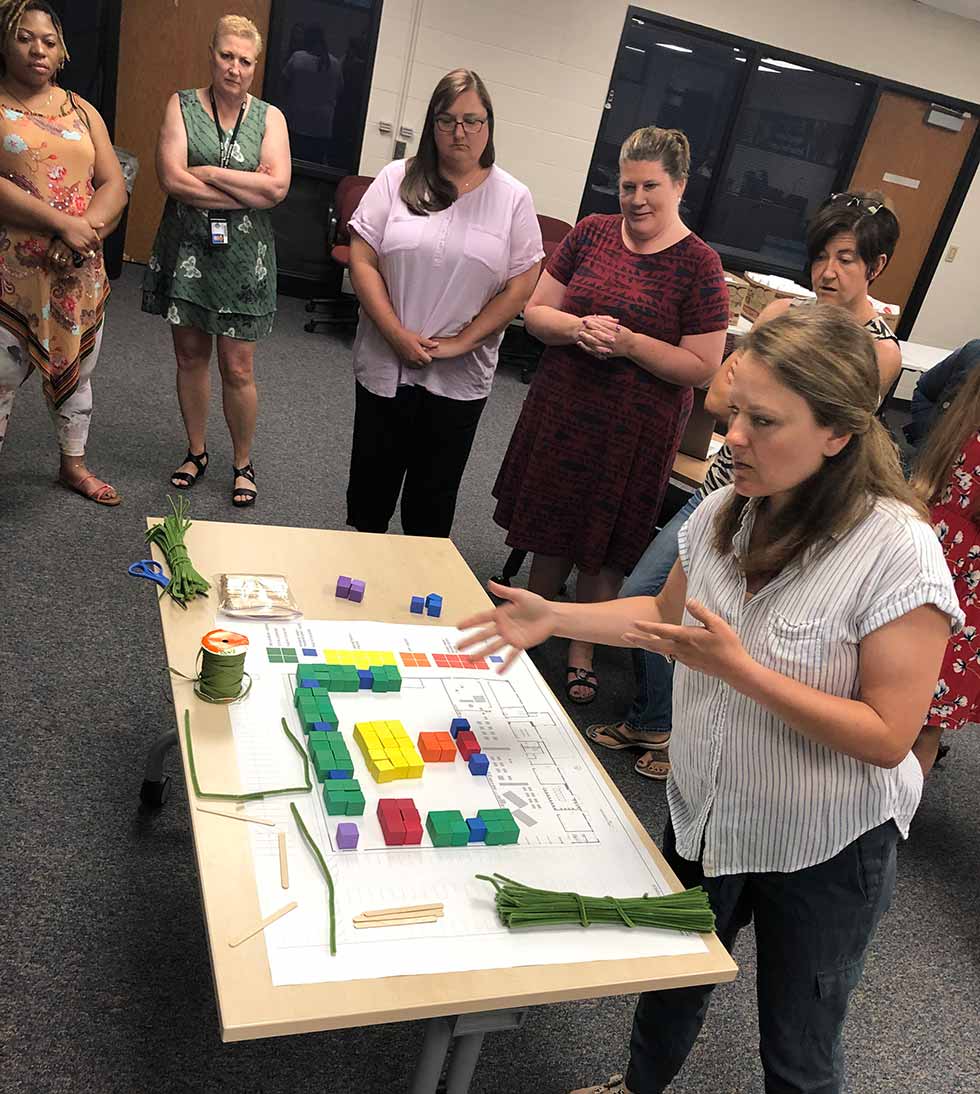
The district and longtime partner Legat Architects delved into research. What did early learners need to do their best? How could the learning environment support that? And what kind of setting could make the staff as productive and fulfilled as possible? Administrators, teachers, and community members participated in design sessions. Legat created a research book with guidance on everything from color choice to technologies and furniture. The district and architect visited Chicago-region early learning centers.
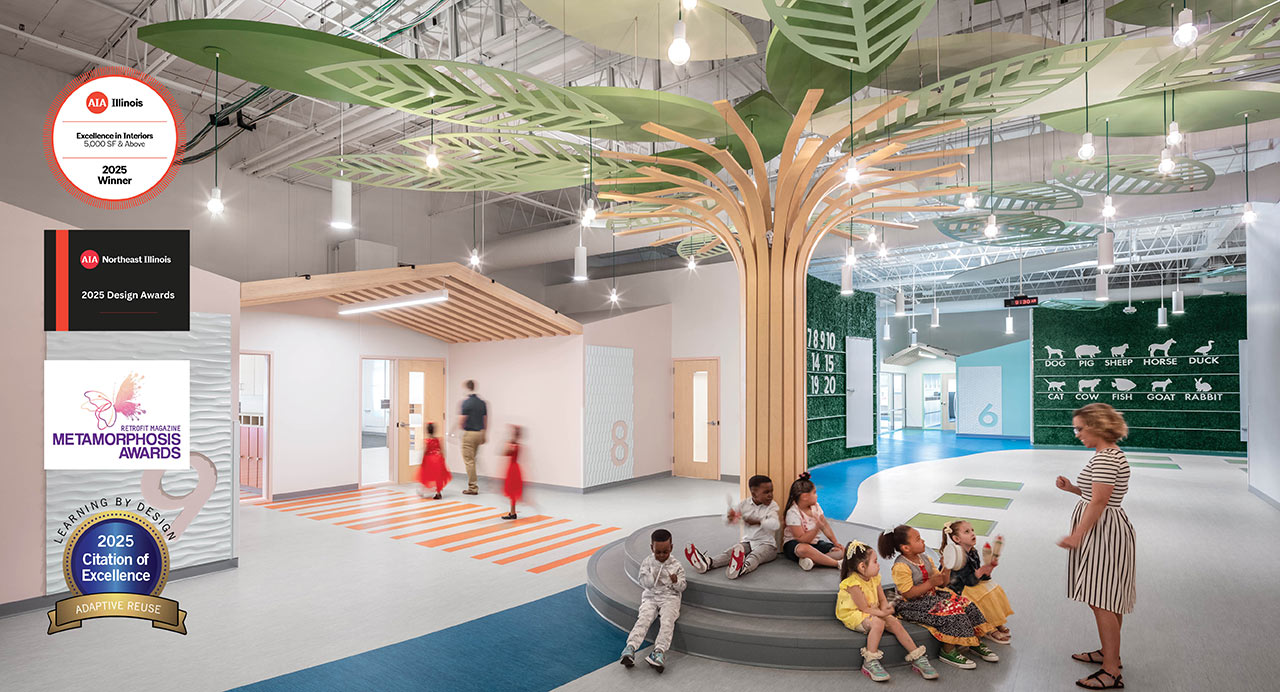
Two years later, the church emerged anew as Bright Futures Preschool and Galesburg Administration Center. The conversion brought an intergenerational hub to the core of the district. Bright Futures offers early learners a playful setting rich in natural light and references to nature. The new district office brings much-needed space and more areas for collaboration.
District engagement sessions resulted in four programmatic options and a consensus plan.
This facility is more than just a building. It’s a promise to our community that we value early learning and are investing in the future of our youngest learners.
Jennifer Graves, Principal, Bright Futures Preschool
Shortly after the facility’s opening, the Illinois Association of School Boards honored it with an Award of Merit in its annual Exhibition of Educational Environments competition.
Over the last three months of 2025, the facility has garnered acclaim among the architectural and educational communities after picking up four more distinguished design awards:
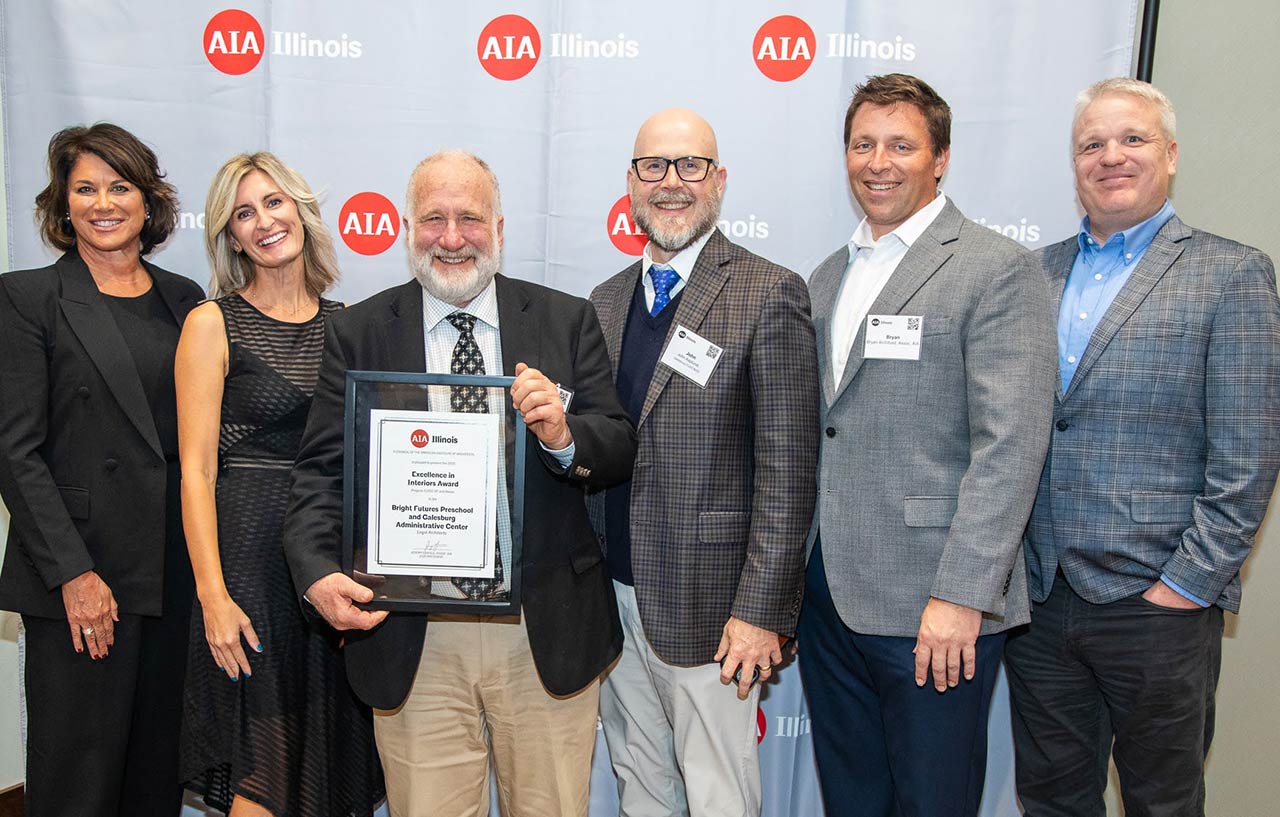
Galesburg CUSD #205 and Legat accept the AIA Illinois Excellence in Interiors Honor Award for Bright Futures Preschool/Galesburg Administrative Center at the AIA Illinois State Conference. Pictured: Jennifer Hamm (Galesburg), Monique Taylor (Legat), Maury Lyon (Galesburg), Dr. John Asplund (Galesburg), Bryan Archibald (Legat), Jeff Sandberg (Legat)
Honor Award – Excellence in Interiors (Above 5,000 SF): AIA Illinois Chapter
Bright Futures Preschool/Galesburg Administrative Center received the American Institute of Architects (AIA) Illinois chapter’s “Excellence in Interiors Above 5,000 SF Award.” It was one of only 10 design honor awards presented at the AIA Illinois State Conference in Champaign. Jurors included licensed architects in Virginia, Minnesota, New York, and Texas.
“The project transforms a dated, underutilized property into a vibrant, educational hub,” said the emcee. “It demonstrates design excellence, sustainability, and measurable community benefits. It is emblematic of cultural transformation, particularly in the realm of public education.”
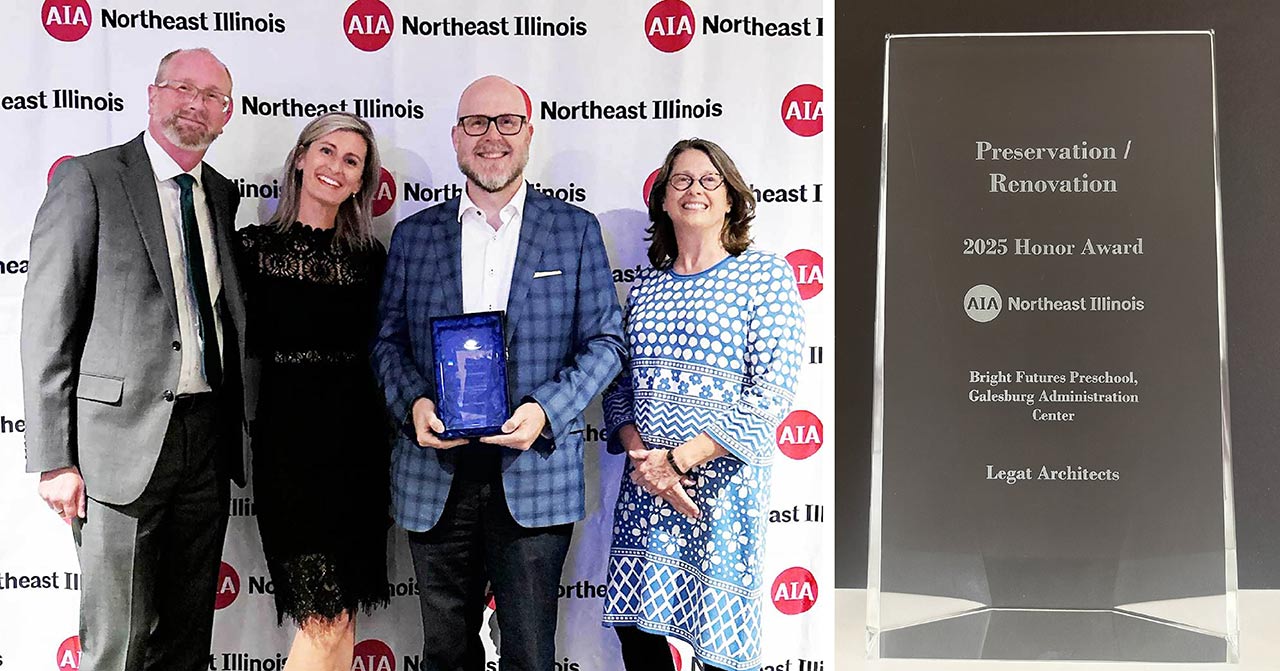
Accepting the AIA Northeast Illinois Preservation/Renovation Honor Award at the Morton Arboretum. Evan Menk (Legat), Monique Taylor (Legat), Dr. John Asplund (Galesburg), Robin Randall (Legat).
The project also received the sole Preservation/Renovation Honor Award at AIA Northeast Illinois’ 2025 Design Awards reception, which took place at the Morton Arboretum. The jury of Midwest and West Coast designers evaluated projects using the AIA Framework for Design Excellence, focusing on sustainability, innovation, and community impact.
Following a summary of the project at the awards reception, one juror mentioned how playful the space was and stated, “I wish I’d gone there.”
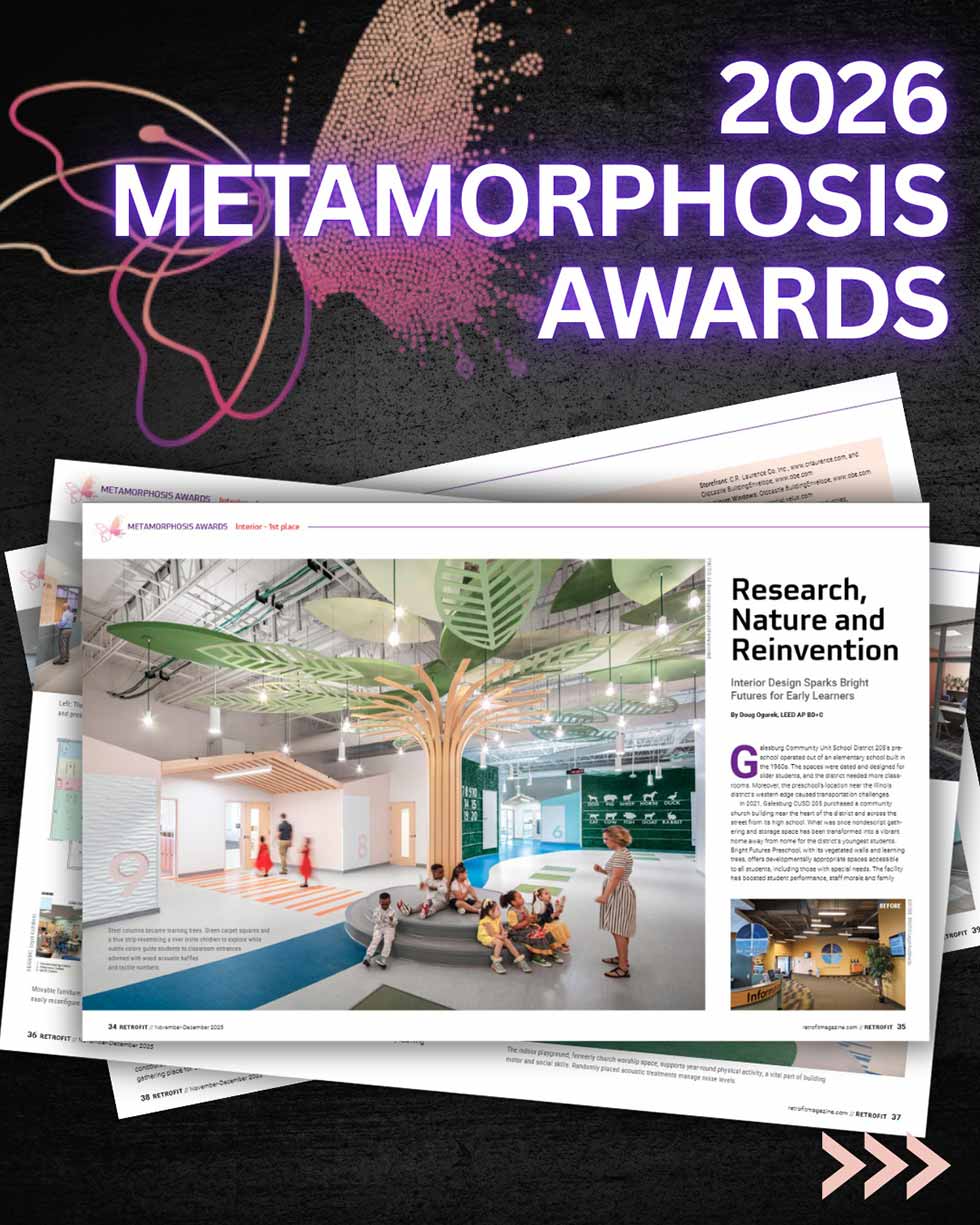
Metamorphosis Award – First Place, Interiors: retrofit Magazine
retrofit recognized Bright Futures with the top interior design award in the magazine’s seventh-annual Metamorphosis Awards. This competition honors innovative and sustainable projects that revitalize existing structures. Among this year’s judges were architects and interior designers in San Francisco, Portland, St. Louis, and Knoxville.
Charles F. Bloszies, FAIA of the The Office of Charles F. Bloszies, called the project a “well-scaled transformation — warm, bright, and welcoming.”
See a retrofit article that explores the facility’s history and design highlights.
Child-scaled details, sensory-friendly materials, and inclusive features reflect a research-driven approach to early childhood development, resulting in a nurturing, nature-connected environment.
Jury, Learning By Design Awards
Citation of Excellence – Adaptive Reuse, Learning By Design Magazine
The school also received a top award in Learning By Design’s Fall 2025 Architecture and Interior Design Awards of Excellence competition. Among 52 entries, Bright Futures Preschool emerged in the top eight with a Citation of Excellence in Adaptive Reuse, the highest honor in that category.
The awards, blind-juried by educational and design professionals, honor projects that improve learning and teaching. Judging criteria range from space planning and sustainability to social impact and response to community needs.
Jurors called the facility “a standout example of adaptive reuse, creating an intergenerational educational hub centered on early learner needs. Biophilic elements—natural light, tree-like columns, textured materials, and river-inspired flooring—foster wellness and focus. The design is playful yet calming, avoiding overstimulation.”
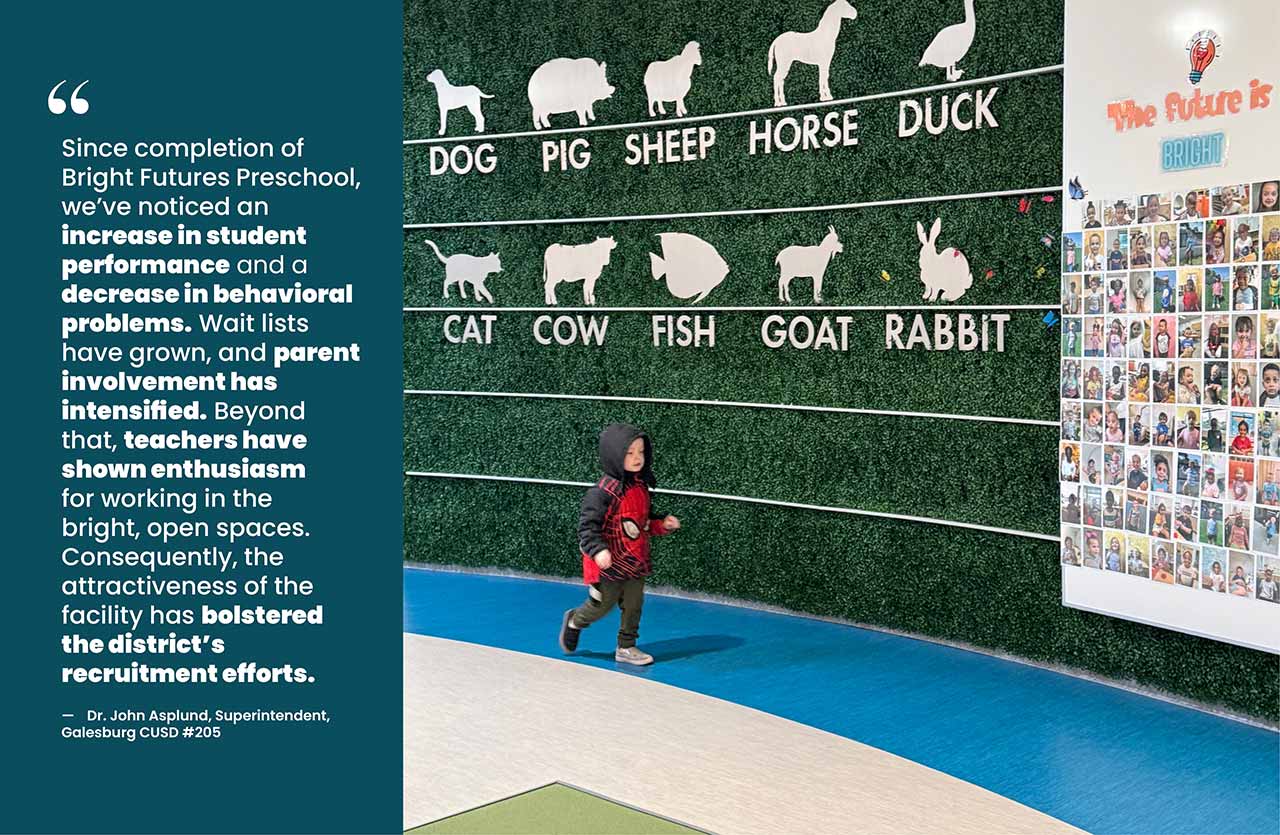
Students transitioning from one space to another can gently run a hand along the textured plant wall. This tactile action keeps them engaged, focused, and connected to the rhythm of the group.
Transformative and Cost Effective
In the two and a half years since Bright Futures Preschool opened, Galesburg CUSD #205 has tracked positive results for students, staff, and community members.
Legat’s Bryan Archibald, architectural project manager of Bright Futures Preschool, has worked with the Galesburg district for more than 15 years.
“The Bright Futures story shows what happens when a district prioritizes student success and supports pushing the envelope with design,” he said. “It also proves that a district can achieve a transformative learning environment without having to invest in a brand-new facility.”