Paying dividends for decades to come: high-tech agriculture meets energy-efficient design at Heartland Community College’s Net Zero Agriculture Complex
Central Illinois, located in the heart of the Corn Belt, offers some of the most fertile soil in the world. Unsurprisingly, the agricultural industry dominates the region.
Though Heartland Community College was surrounded by farmland and offered several agriculture courses, the Normal, Illinois institution lacked a dedicated program and a facility to house it. In summer of 2022, Heartland embarked on a journey to create a new agriculture program. The college also broke ground on a flagship facility that would help prepare students for tomorrow’s high-tech agriculture jobs.
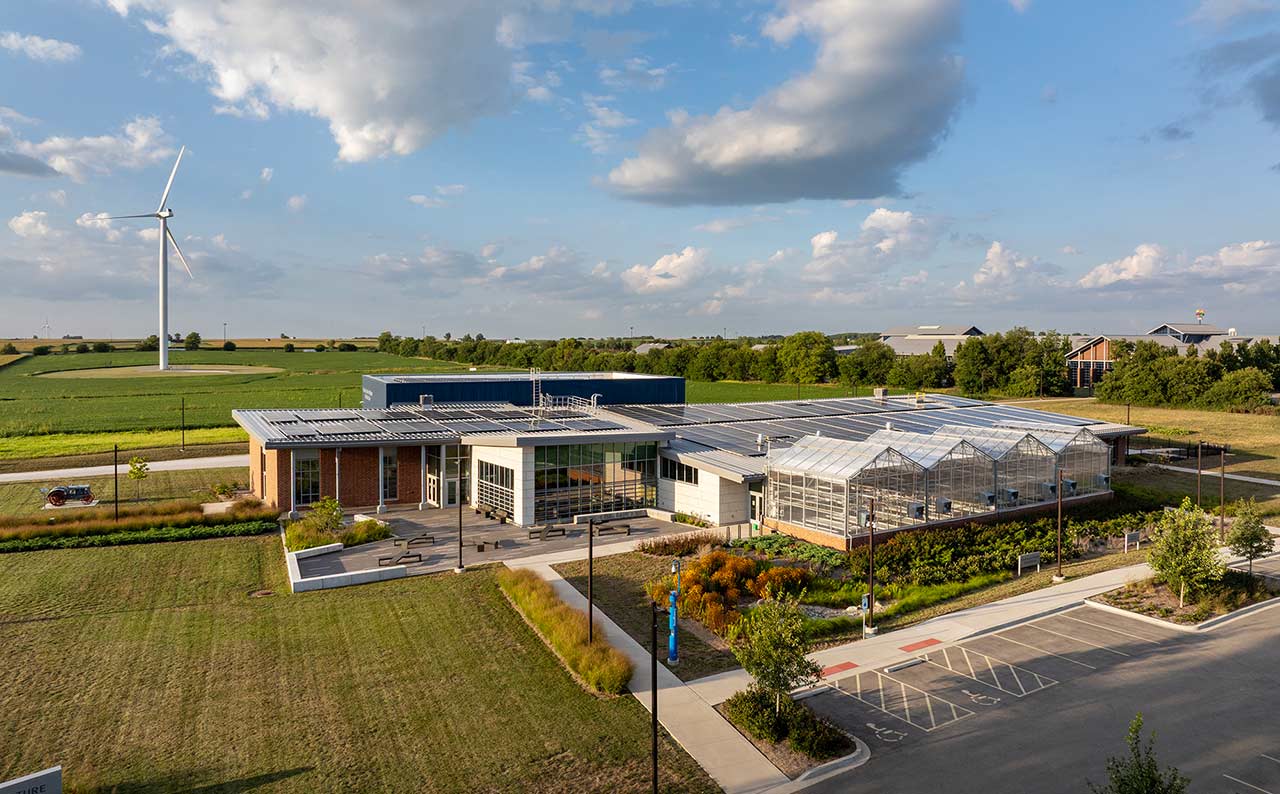
The 29,500-square-foot Heartland Community College Net Zero Agriculture Complex, designed by Legat Architects and completed in January 2024, not only anchors the program but also models energy-efficient facility design. Examples of the latter range from the geothermal heat pump wells hundreds of feet beneath the earth to the solar panels that crown the facility. Thanks to these strategies, the complex has become one of Illinois’ first community college facilities designed from the beginning to achieve net zero, meaning it produces enough energy to offset annual energy use.
“This is not just a classroom building for our agricultural program,” said Heartland President Keith Cornille. “This is a sustainability showcase that will pay dividends for decades to come.”
Watch this video for a case study about the Heartland Agriculture Complex. College leaders, students, and the Legat design team share the facility’s energy-efficient strategies, agricultural advancements, and community impact.
The Business and Art of Agriculture
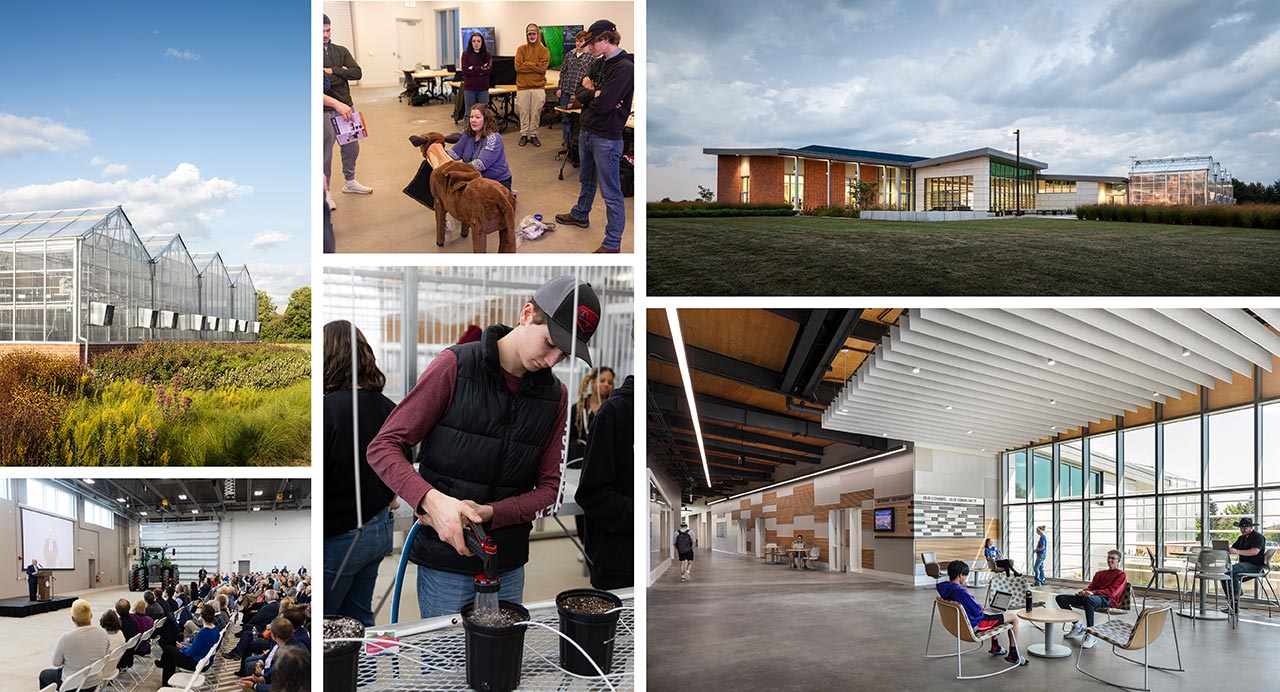
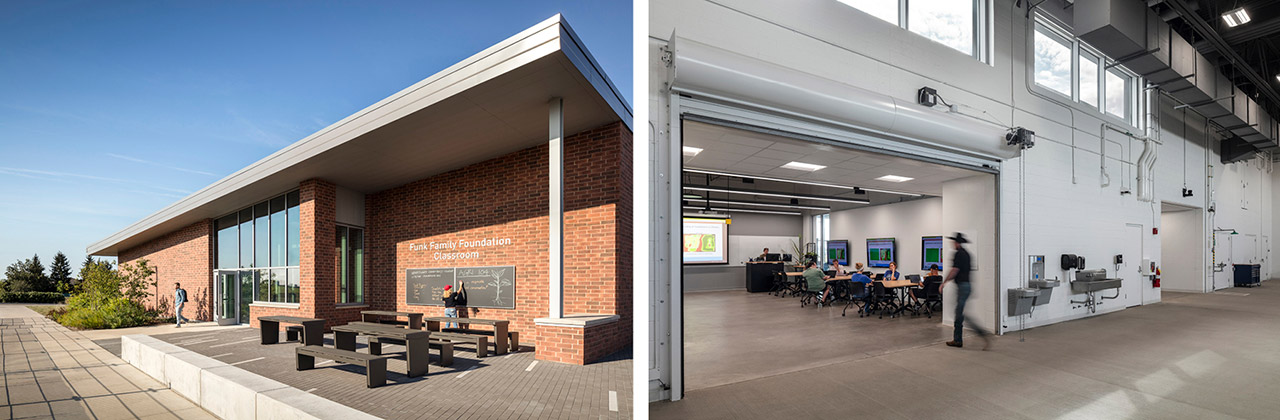
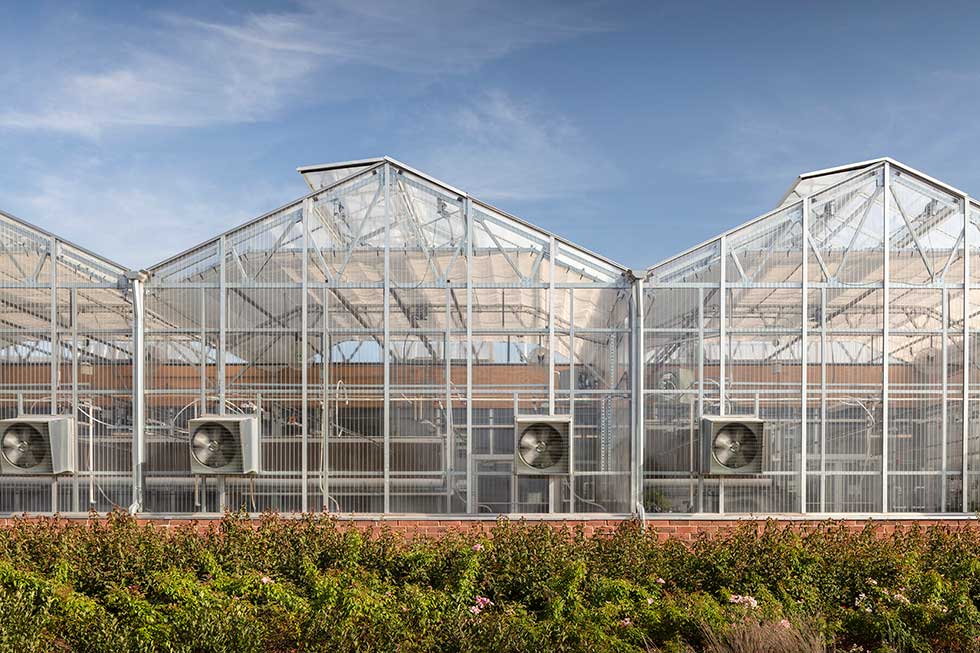
The Agriculture Complex occupies a former homestead that the college leased to local farmers. Attached greenhouses sustain three different growing environments.
A variety of labs support lessons in everything from soils analysis and plant science to agribusiness. Roll-up doors allow heavy machinery or livestock to access a multipurpose lab that functions as both an indoor training bay and an events venue.
Another lab welcomes new programming in precision agriculture, which relies on data from GPS, drones, and other technologies to increase crop yields while preserving resources. The facility even offers an outdoor classroom with power connections and views of the surrounding cornfields.
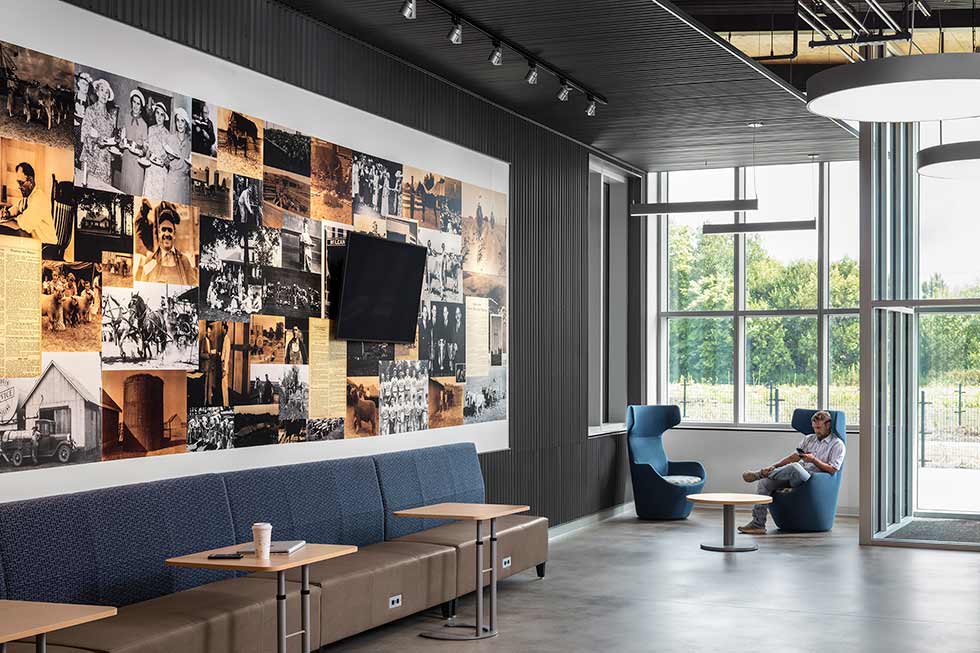
Light-filled corridors and gathering spaces encourage student and teacher interactions. The design injects reminders of the facility’s origins throughout the space. For instance, a collage near one entry features historic agriculture photos and articles in black-and-white and sepia tones. Cross-laminated timber on ceilings adds warmth and recalls the barn that once stood on site.
“We didn’t want community areas to look like the typical educational space,” said Legat interior designer Monique Taylor. “We wanted them to look open and warm, and to create an agricultural reference point that draws attention to the facility’s function. So when students come in, they’re immediately comfortable.”
A Net Zero Triad: Superinsulation, High-Efficiency Systems, Photovoltaics
Since its campus master plan was completed in 2020 and even before that, Heartland Community College has prioritized renewable energy systems … not just for their environmental impact but also for cost savings. The college saw the Agriculture Complex as an opportunity to showcase this focus and to set a standard for energy efficiency by achieving Illinois’s first net-zero community college facility.
“Net zero was a priority from the project’s onset,” said Legat project manager Michael Lundeen. “If achieving net zero required that we design a pink building, then we would have designed a pink building.”
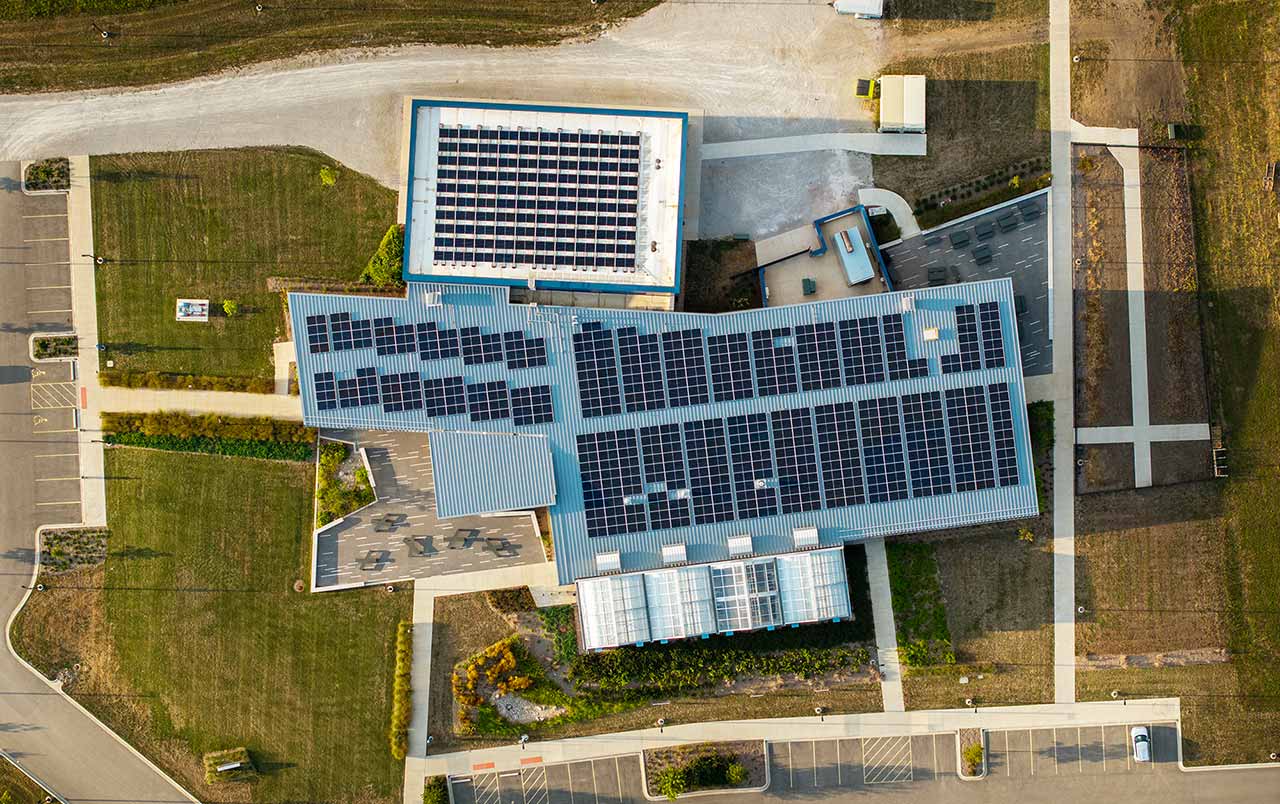
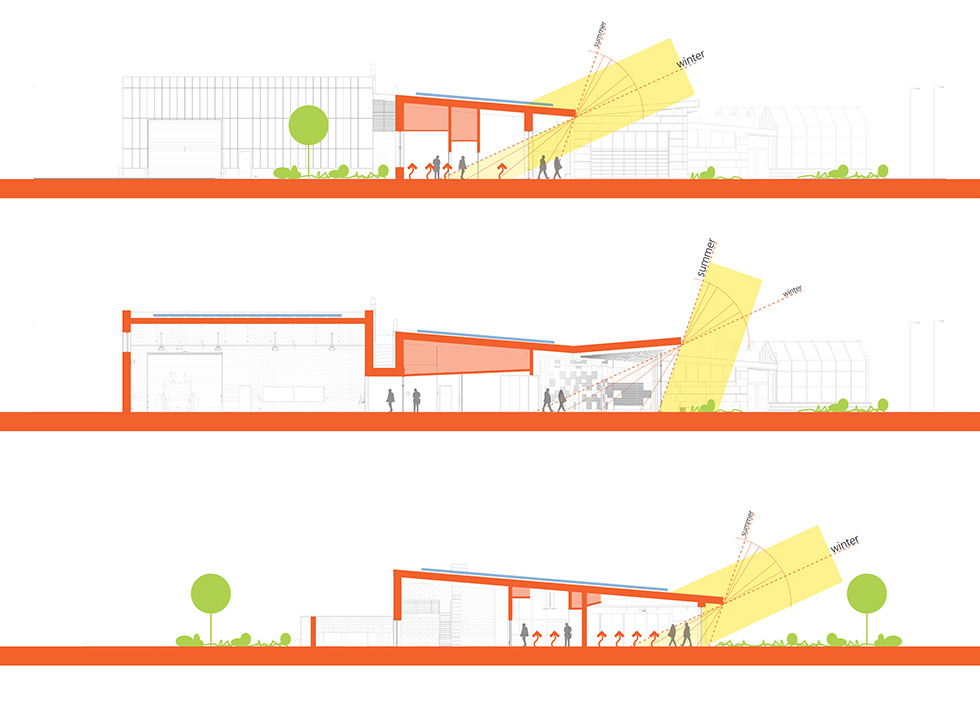
During planning, Legat explored 18 options for building form and orientation. The selected option resists glare and heat in summer while absorbing warmth and light in winter. The building’s shape and placement already start the reduction in annual energy costs.
The most significant contributors to the building’s net-zero achievements, however, relate to building systems. Lundeen and team relied on three strategies to optimize energy efficiency while respecting Heartland’s budget. And surprisingly, not all these approaches are readily apparent.
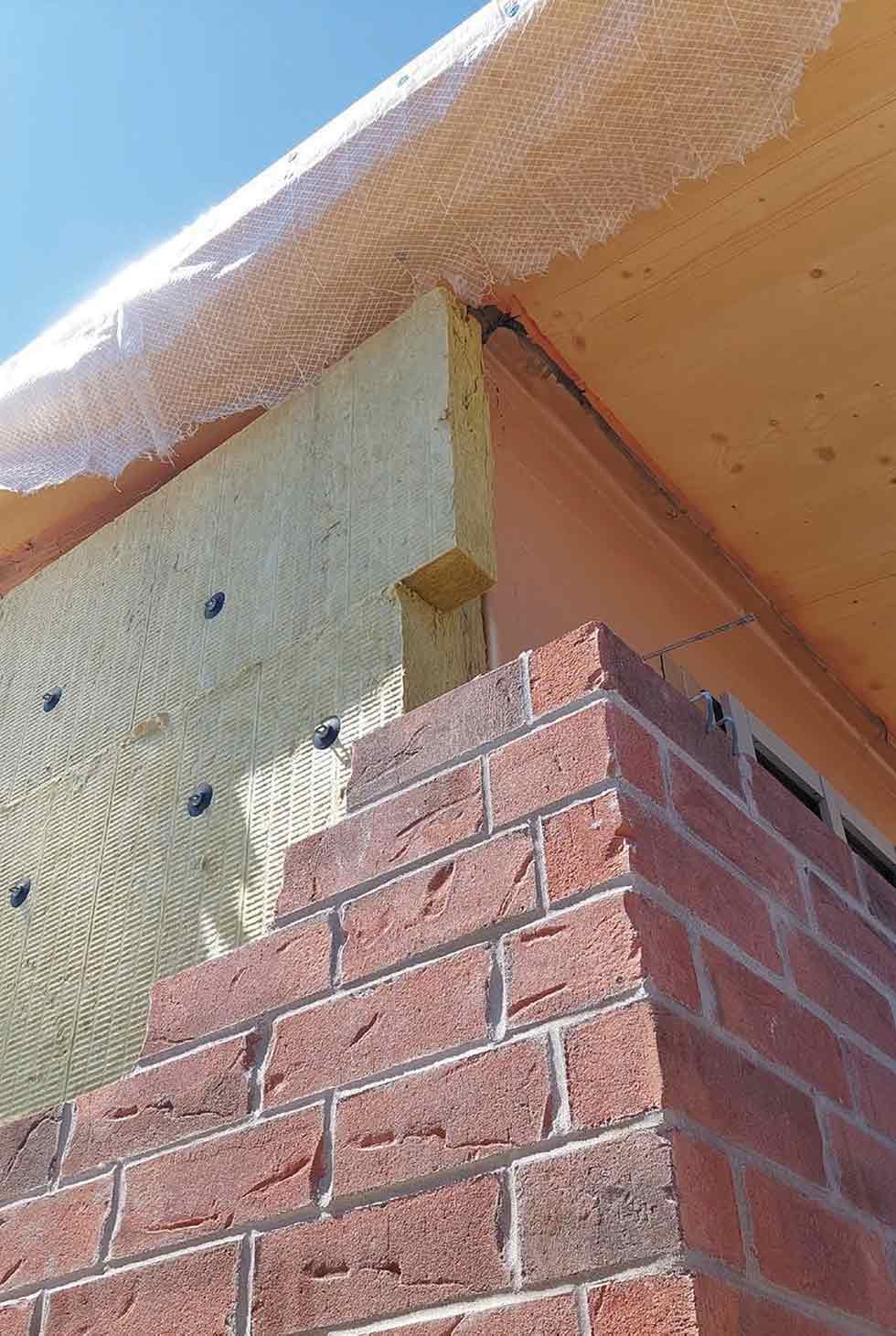
The first tactic was maximizing the building envelope insulation. Whereas a standard building of this type might have walls between eight and 14 inches thick, the Agriculture Complex’s “superinsulation” boasts an average wall thickness of 26 inches. Measured by R-value (thermal resistance), the exterior walls achieve R-38, far exceeding the code minimum of R-9, while the roof’s R-60 insultation doubles the required R-30. Additionally, the complex raises the standard glazing (versus solid walls) ratio from 15% – 20% to 25%. The additional glass helps offset lighting energy use, enhances solar gain during colder months, and better displays the surrounding farmland.
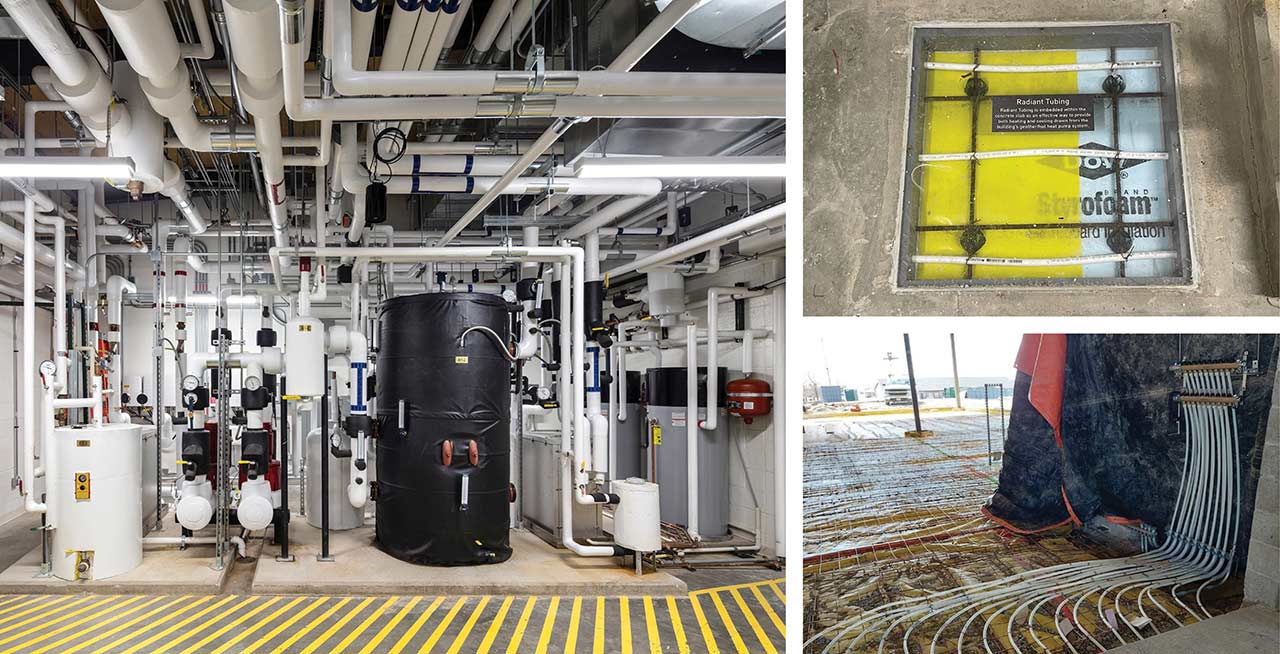
The second high-efficiency investment is the complex’s mechanical system: a ground-sourced geothermal heat pump that taps stable underground temperatures to reduce heating and cooling loads. Heartland was aware of other systems with a lower upfront cost. Facilities personnel, however, had worked with geothermal systems and understood their long-term operational savings and reduced maintenance costs compared to other systems. The heat pump system also plays an educational role: floor tiles in the facility’s mechanical room can be removed to reveal the radiant tubing fed by liquid treated by the geothermal system.
The Heartland Agriculture Complex’s third energy-conscious feature is its most visible: the nearly 20,000-square-foot rooftop array of south-facing solar panels. The panels produce enough energy to power the building over the course of a year.
Legat helped Heartland apply for and secure a $2 million grant from the Illinois Clean Energy Community Foundation to help offset the cost of these systems.
That’s My People
The complex has helped create a sense of community among students and teachers.
Miranda Buss, Heartland Agriculture program coordinator, said the facility has increased student involvement in clubs and organizations. “It’s no longer, ‘I just go to school there.’ Now, it’s ‘That’s my people.’”
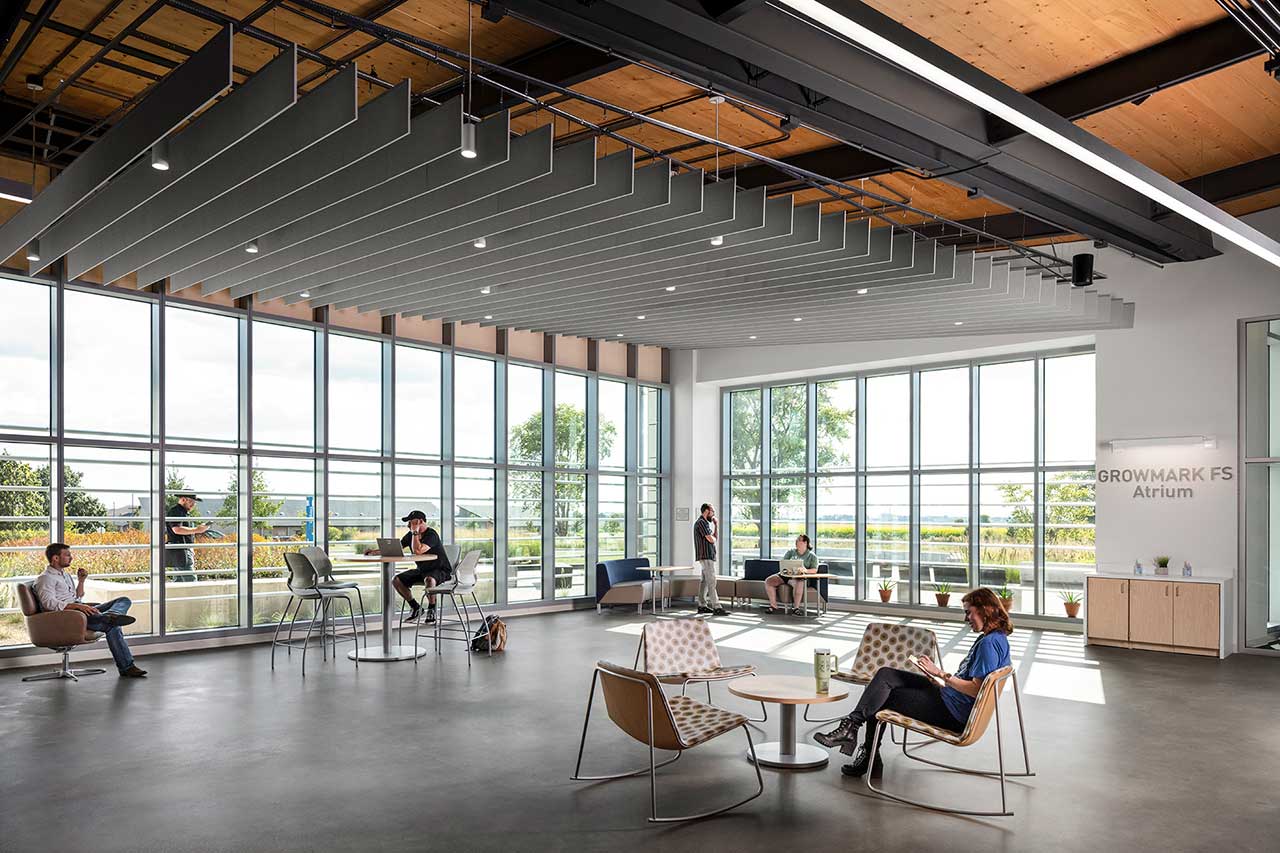
“I would sit in the atrium and talk to my friends and the advisors that would come through,” added former student Kaylee Lewis. “I made a lot of good friends that way.”
The Agriculture Complex’s impact goes beyond traditional students. It has served as a venue for local businesses. COUNTRY Financial used the facility for its annual Hackathon, an intense three-day idea-generation event. The complex also hosted the Illinois Farm Bureau/McLean County Farm Bureau AgTech Innovation Showcase, as well as Illinois Green Economy Network’s (IGEN) annual conference. Heartland anticipates the center will be a resource for agriculture-related youth programs such as FFA (Future Farmers of America) and 4-H.
Heartland Community College, keenly aware that the future of farming hinges on environmental stewardship, has introduced the Agriculture Complex as a real-world model of sustainable design and education.
“What we’re trying to achieve here is long-term,” said Cornille. “It’s about sustainability. It’s about being a good steward of resources.”
Contact us with your facilities challenges.