Where architectural leaders emerge: AIA Ohio’s highest recognition validates Legat’s support of early-career professionals
Ross Jackson joined Legat Architects’ team for the Ohio Department of Natural Resources’ (ODNR) new Portage Lakes State Park Visitor Center early in the design phase. Jackson, who had been with the firm’s Columbus, Ohio studio for three years, plunged into what would become the most pivotal project of his career.
The visitor center presented many challenges: building on a sloped site, creating views to Turkeyfoot Lake, carving out comfortable gathering areas. The team was even tackling design changes during construction.
Just a few years into his architectural career, Jackson put everything he had into the project. The Ohio State University graduate tweaked floor plans and finishes. He pored over details. He coordinated consultants. He asked questions of his more experienced colleagues. He visited the site every week during construction.
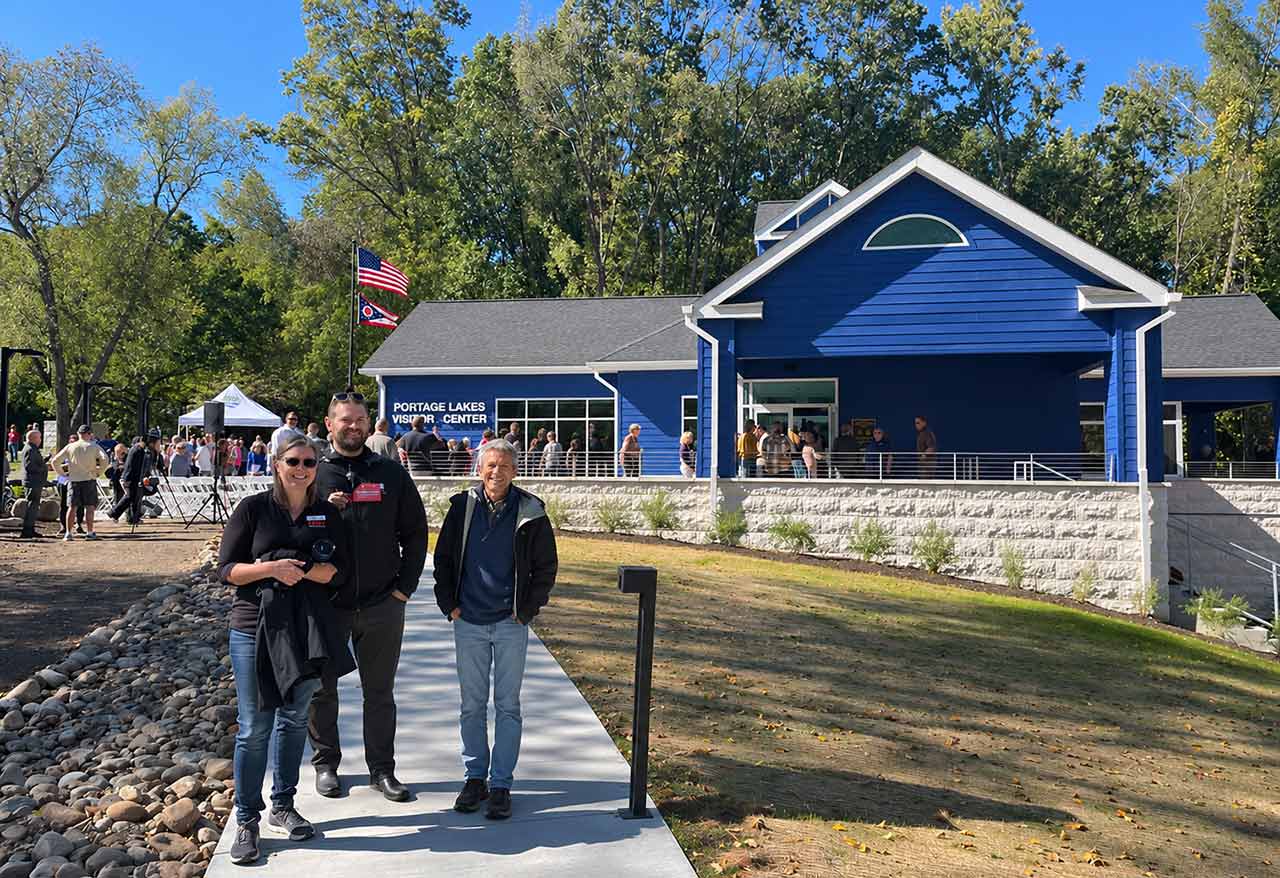
When he attended the October 2025 grand opening of the facility, Jackson observed ODNR staffers’ and community members’ positive reactions. All the hard work, he concluded, was worth it. The Portage Lakes State Park Visitor center not only broadened Jackson’s knowledge, but it also proved to be a critical factor in obtaining his architectural license in Ohio.
The visitor center is one of many projects in which Jackson has played a key role since joining the firm in early 2020. His story demonstrates the firm’s strong support of younger professionals.
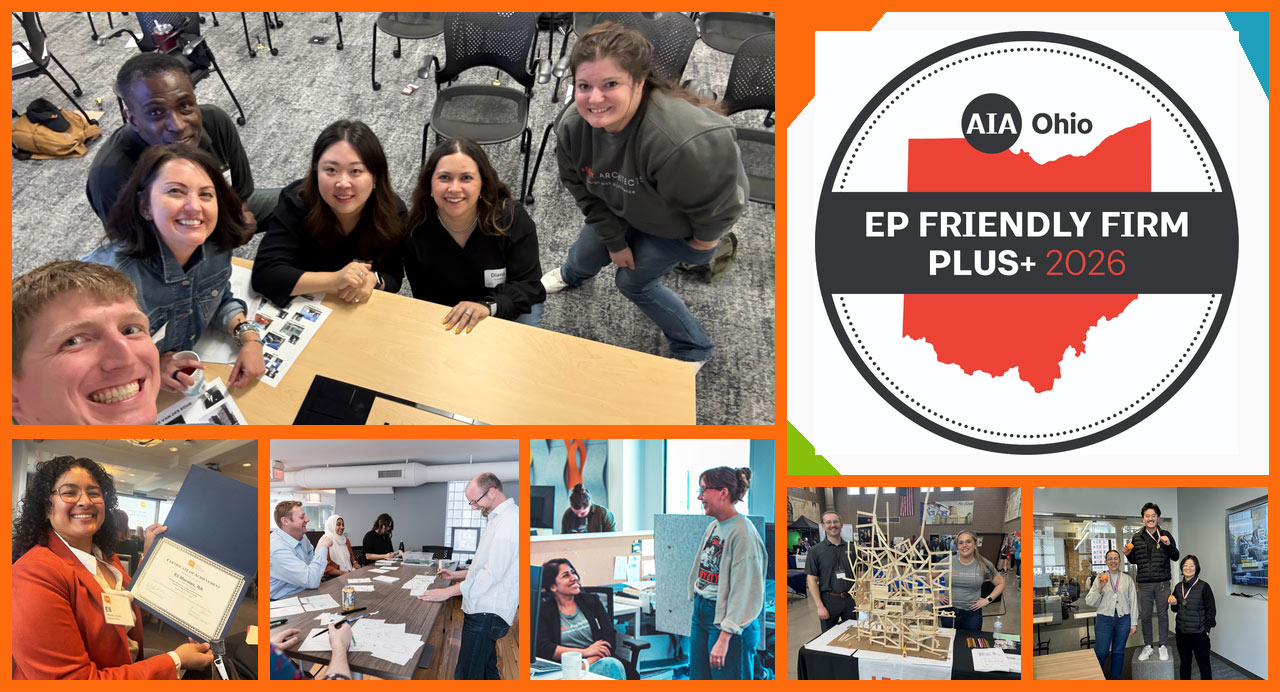
Legat has emerged as one of just 26 firms to earn the Early Professional Friendly Firm Plus+ (EPFF+) designation from the American Institute of Architects’ (AIA) Ohio state chapter. The program “celebrates firms that offer exceptional support and opportunities” for student interns, recent graduates, and newly licensed architects. Firms receiving the “Plus+” designation scored at least 80% on the 2026 EP Friendly Firm questionnaire. The accomplishment builds on Legat’s similar achievements for AIA chapters in Illinois, Indiana, and Iowa.
“We want to give our next generation of leadership the skills and confidence they need to excel in their careers,” said President and CEO Jeff Sandberg.
Following are some of the benefits that Legat offers emerging professionals (EPs):
Obtain Financial Support and Incentives
Among the biggest challenges that architecture students face are financial obstacles: Studio materials and software are expensive. Architecture degrees often require more years (and more tuition) than other professions. For many students, the time demands of architecture studio make part-time jobs extremely difficult. On top of this, recent federal student loan changes have reduced borrowing limits for new graduate students in architecture programs.
With all these burdens, many recent grads begin their careers saddled by debt. And the hardship does not stop there — emerging professionals often pay out of pocket for their Architect Registration Examination (ARE) and AIA fees.
While many firms cover only a portion of employees’ dues, Legat covers 100% of AIA membership dues. The firm also reimburses employees for passed AREs and takes on membership dues for other industry organizations such as IIDA (International Interior Design Association) and NOMA (National Organization of Minority Architects). Once employees become registered architects, they receive a bonus and a raise.

“We strongly encourage EPs to obtain architectural licensure,” said Director of HR Susan Becker. “Paying for their passed exams and sponsoring their membership fees reinforces our commitment.”
Additionally, Legat is a 100% employee-owned firm — that means every employee can become a shareholder. This, coupled with profit-sharing opportunities and a 401(k) plan with a 6% match, adds another financial incentive.

Learn from Patient Mentors
Another focus of Legat’s EP-friendly efforts involves making leadership and more seasoned employees available to early-career professionals.
While working on a YMCA renovation, Jackson constantly asked colleagues Richard Gallens and Ted Haug what he saw as potential ARE test questions: Why does this door fit this way? What’s the rationale behind these fire separations?
“I wanted more context than, ‘Just do this,’” said Jackson. “Richard, Ted, and other accomplished coworkers have always been patient and willing to explain the ‘why’ behind design decisions.”
Gain Diverse Design Opportunities
Many architecture students entering the workforce seek a firm that prioritizes design. Legat’s collaborative process emphasizes that the best idea can come from anyone from a student intern to a veteran architect with over 40 years of experience. The firm allows emerging professionals to work on a variety of projects.
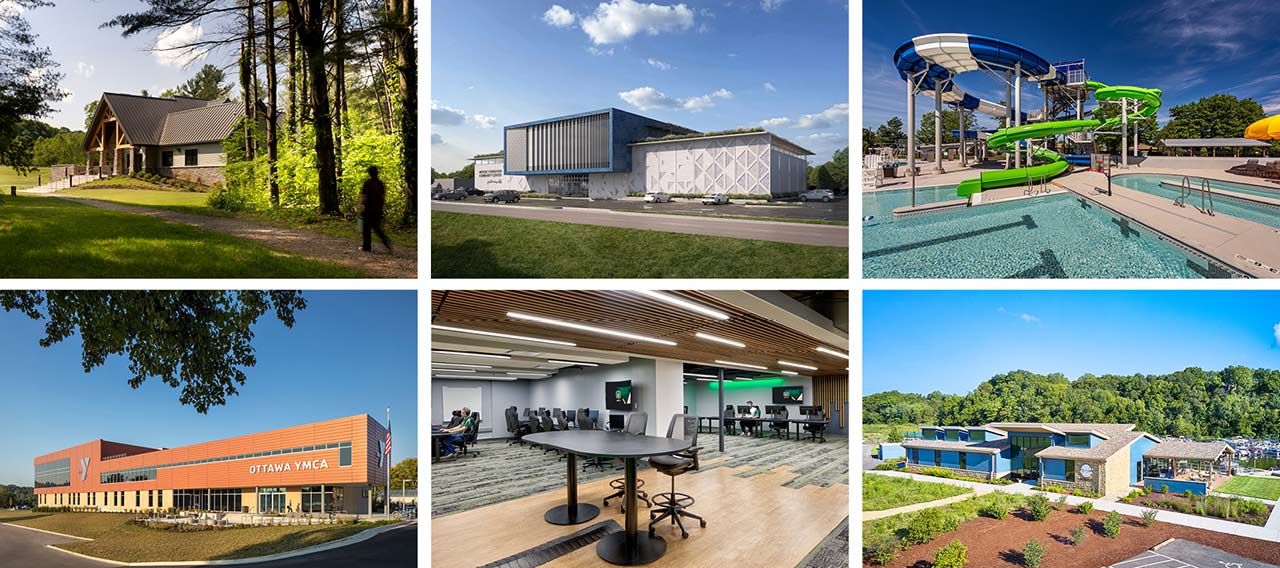
Jackson, for instance, has contributed to many different projects: state park visitor centers, fitness facilities, an Islamic community center, a residence hall roof replacement, a master plan for a large school district, a police facility renovation, an aquatic center, and others.
“When people start here, we don’t restrict them to a particular project or space type,” said Sandberg. “We want them to get a wide array of experiences so they can determine the path that works best for them.”
Grasp the Fundamentals in the AI Era
AI can rapidly create images and diagrams in early design phases. It can also automate production tasks during the construction documents phase.
Erin Reilly-Sanders of Legat’s Ohio studio says that while these advances may speed up the process, they also create obstacles for emerging professionals.
“There’s the obvious concern about AI taking away jobs,” she said, “but there’s a more subtle threat: for years, architects have learned a great deal by reviewing markups and doing corrections. If AI cuts production steps, EPs lose opportunities to get a solid understanding of how things work so that they can become the next experts.”
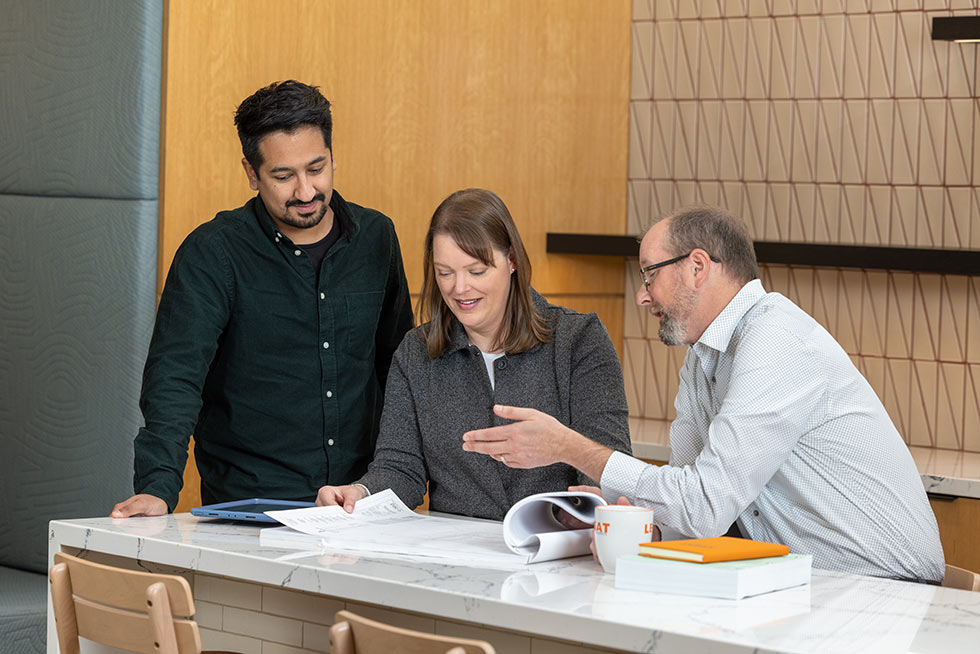
Legat prioritizes teaching less experienced employees the fundamentals. What does a good door jamb detail look like? How should a wall section come together?
Experienced architects explain the thinking behind corrections. The goal is that technology works more efficiently without eliminating the technical knowledge employees need to advance their careers.
Tap into Small Studio Camaraderie with Large Firm Resources
Legat operates six studios across four Midwestern states: Illinois, Indiana, Iowa, and Ohio. EPs join a smaller team with access to the resources of a larger firm. Additionally, the firm does not have private offices — EPs absorb the knowledge that comes with working side-by-side with seasoned veterans.
“It’s not uncommon to hear colleagues discussing project details around the studio,” said Reilly-Sanders. “When a question about a type of flooring, for instance, comes up, people know who to ask.”
The smaller studio concept also supports team building. Seasonal outings and community outreach events bring employees together for fun outside the studio. And the firm’s annual retreat brings all studios together for a day of learning and celebration.

A Forever Firm Where Everyone Has a Voice
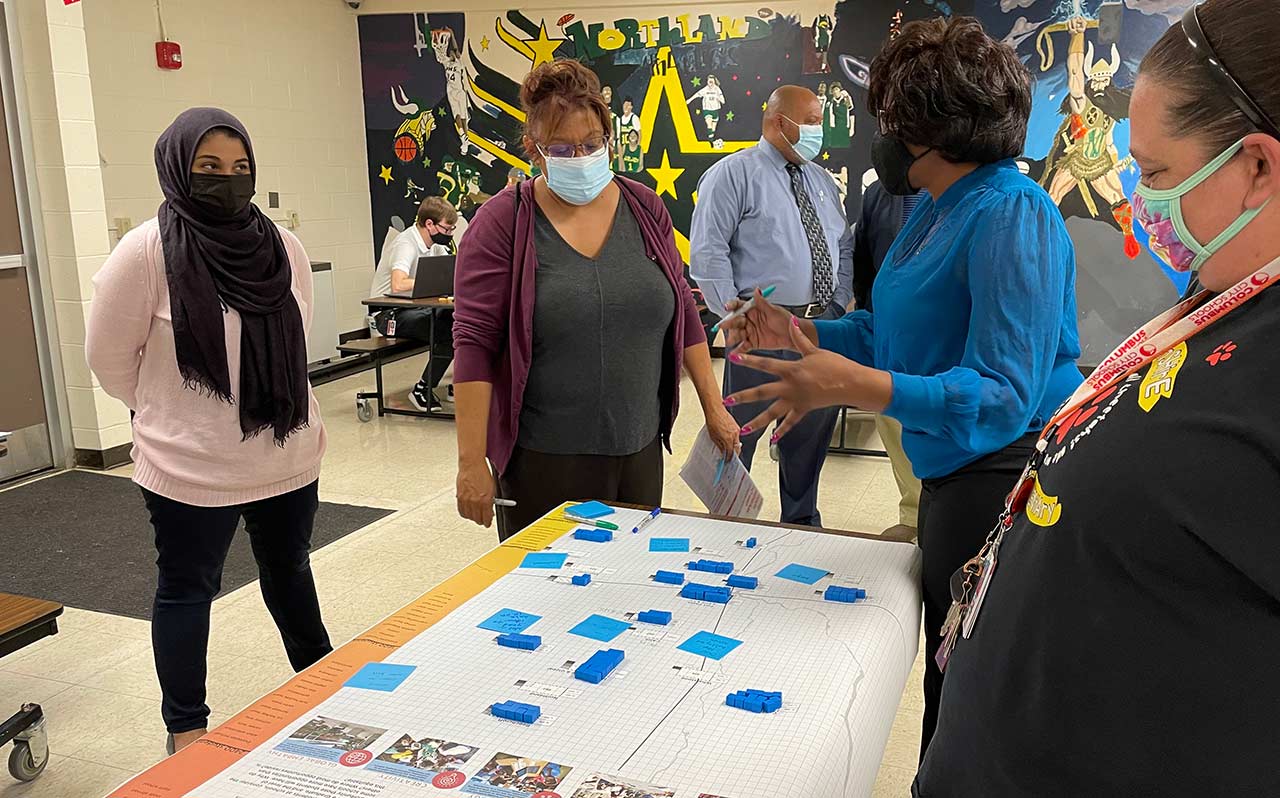
In 2020, Columbus City Schools (CCS) tasked Legat with creating a plan to guide district construction projects. It was a formidable challenge: as Ohio’s largest district, CCS operated 112 facilities serving more than 46,000 students, and the district wanted input from each of its major geographic communities.
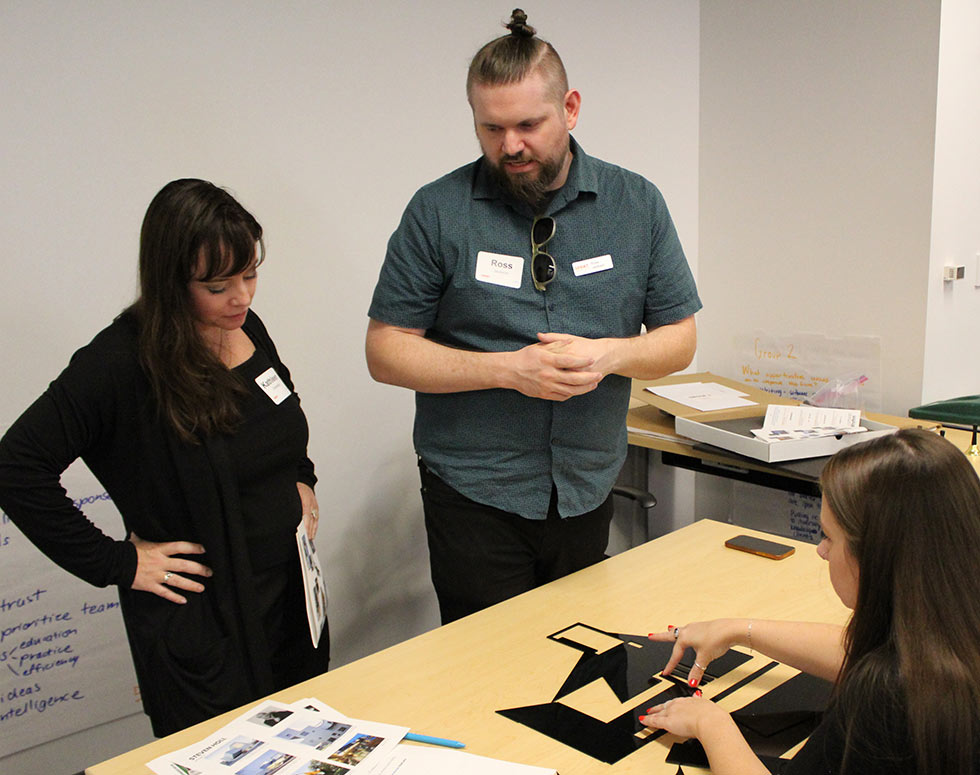
Ross Jackson, who had just joined the firm, drew from his love of board games to design a game for engagement sessions. It helped community members understand the obstacles the district faced, and it made them comfortable sharing their opinions. That game proved to be a decisive factor in the successful 2022 master plan, which aims to create equity between schools and prepare the district for growth over the next 20 years.
This anecdote shows how the firm encourages EPs to use their skills and talents to make a difference on projects.
“Our experience with job seekers has shown that many EPs are out there looking for their forever firm,” said Becker. “Our goal is to be that firm for them. It’s not surprising, then, that many of us have been here 20, 30, or even 40 years.”
While each of Legat’s six studios has a distinctive culture, what connects them is the belief that everyone should have a voice in the design process. There is an emphasis on applauding emerging professionals’ achievements, from licensure and project contributions to successes outside the workplace.

“We reward and celebrate early-career professionals not only because we value them, but also to prove to their peers that this is achievable,” said Sandberg. “It can be done, and we’re here to support their journey.”
Explore current career opportunities or contact us with your facilities challenges.